Showing posts with label Books. Show all posts

The Results, the Answer, the Winner!

on Saturday, December 15, 2012

Briefly, for those who entered last week’s competition to win a paperback copy of Breaking Faith, here’s the result you’ve all been waiting to hear.

The question I posed for the contest was: ‘In Breaking Faith, what’s the opening line of Chapter 11?’
The answer, of course, was: ‘I was not afraid of contact with others; I simply had not experienced it.’

No one who entered had the wrong answer, so it was all down to the draw.

The name drawn out of the hat was Rasuna from Sumatra, and the book is winging its way across the seas even as you read this, inscribed with the special message requested by Rasuna.

Congratulations, Rasuna; enjoy the read. And my thanks to all who entered the contest; commiserations to the unlucky majority. 

Enhanced by Zemanta

Featured on Goodreads.

on Wednesday, December 5, 2012


Those who are regular visitors will know of my enthusiasm for a large-membership reading community on the web: Goodreads is an excellent site for writers to interact with readers, for readers to chat about their favourite books, read reviews, gain recommendations, and, in fact, join in almost any activity you can imagine that deals with the world of books. It is, in short, a book-lovers' paradise. If you're not already a member, I urge you to join this community.
But, just for good measure, it turns out one of my books is featured there at present. Ten Tales for Tomorrow is an anthology of dark speculative fiction, which has earned praise from those who've read and reviewed it. You'll find more details, and buying links, on the Published Work page of the blog.
Enhanced by Zemanta

The Artist’s Way, by Julia Cameron, Reviewed

on Sunday, July 1, 2012

Subtitled A Course in Discovering and Recovering Your Creative Self and A Spiritual Path to Higher Creativity, this is not merely a book, but an instruction manual about how to become the artist you truly are.

Okay, so I may already have alienated the pragmatists and those for whom the idea of artistic creativity is anathema. But stay with me. You, too, will benefit.

The book is the culmination of a number of years of work Julia has undertaken first to release her own creativity and then that of friends, and, ultimately, paying students. She is, of course, a well-known film director, amongst other talents. She lives in a world populated by people who use their creative talent to earn their living and to produce many of those things we take for granted in our daily lives. Creativity is not the sole preserve of the isolated artist living in a dream, after all. It is an element in the everyday experience of most of us, if we’re willing to discover it. So, there’s something here for everyone. And I do mean everyone, regardless of the type of life and the nature of the work undertaken.

The book guides the reader through a series of exercises and explorations of self over a period that is suggested to be 12 weeks. I took a little longer, as I had 2 weeks of holiday already planned and those weeks interrupted the flow. The exercises, or tasks as she calls them, are essential to the course.

Before you make a decision to experience this book - it is more an experience than a reading exercise - I should warn you that you’ll need to approach it with commitment. A partial, casual approach will not work. You must be willing to immerse yourself in all that it entails, if you’re to gain from it the lasting and increasing benefits it promises.

As you proceed, you’ll find all sorts of excuses not to do certain things, all manner of reasons why you, in particular, shouldn’t bother with some aspects. You’re too experienced, you’re too creative already, you’re simply too busy, you’re above such considerations, you don’t have that sort of problem, etc, etc. But allowing yourself to fail, permitting yourself to face those fears you have buried, will, if my experience is any guide, free you from self-destructive influences you’re unaware you have acquired.

I learned a good deal about myself during the course of the weeks. Not all of it was good. But most of what I learned was positive in its influence on my development. There were painful recollections, shameful admissions, abortive attempts at justification and some unexpected unpleasant revelations. But these are all part of the healing process that permits the inner artist to develop and flourish in the materialistic age we live in. To compensate for the unpleasant, there were many unexpected plusses along the way. I discovered really good things about myself, came to understand why I have held certain beliefs, why I have been unable to take full advantage of my gifts and talents, why I have rejected certain helping hands, why I have wasted so much time and effort; even, perhaps, why I became ill for so many years.

Sound a little over the top?

That’s what I thought when I started. But I grow daily more certain about what I’ve learned during these few, important, weeks of my life. I’ve discovered that I have true gifts, real talents, a fantastic imagination, a unique way of seeing and being. Sometimes the journey has been frightening, sometimes it’s been tedious, but often it’s been exhilarating, exciting, vital, and full of fun.

I never considered myself a ‘blocked’ artist. I seemed to be moving along with my creative life quite nicely, thank you. But the honesty this course forces upon its students woke me to the real reality (yes, I know, a tautology, but a deliberate one). We spend so much of our lives under the cloud of self-deception that escape is not only considered difficult, for many it is never considered at all, since these individuals have no consciousness of their self-imposed imprisonment.

I think it is clear that I would recommend this book to everybody.

There is a ‘but’; there is always a ‘but’.

One aspect of the narrative and underlying philosophy of the book threatened, from the start, to undermine the effectiveness of the course for me. I am a committed and self-defined, one might almost say passionate, agnostic. I’ll explain what I mean by that, since it’s important to your understanding of my position and argument. I believe that if there is a God, such a force, being, presence - call it what you will - is so far above our understanding as to be incomprehensible. I believe any attempt to define a God must, by definition, be an insult to such a concept and result in a counterfeit rather than the real thing. Since I understand the concept to be ineffable, I am left with the only logical alternative; i.e. I remain open to the possibility of a God but can make no description of such a power and, by logical extension, cannot accept any of the orthodox deities currently worshipped by the many religions that exist. These are, patently, constructs of man in a quest to answer the unanswerable questions and, no doubt, serve a useful, if often divisive, purpose in providing a sort of comfort for those who prefer not to think about such issues for themselves.

So, when Julia Cameron talks about accepting that there is an external creative being, that she calls God (using the ‘Good Orderly Direction’ tag to reduce the objections of the sceptics) I find myself resistant. Initially, this very insertion of the idea of faith into the course formed a barrier for me. But I persevered, putting that aspect on the back burner until I could examine it and find a replacement philosophy. And I’m glad I did that. Persevered, that is. Had I allowed my objection to stop me completing the course, I would have missed out on a very positive experience and failed to arrive at the new place I now find myself, creatively speaking.

As to what alternative philosophy I discovered along the way to replace the God aspect: this isn’t the place to detail it. Suffice to say that I found such a concept and am happy to employ that in place of the God facet.

So, again, would I recommend this book? Only to everybody on the planet. Go out and buy, borrow, or beg the volume. Make a commitment to do the tasks and exercises. Make a commitment to complete the course, however long it takes. If you follow it with the required open mind and the necessary effort you will come out on the other side a more creative, balanced and happier person. 

Enhanced by Zemanta

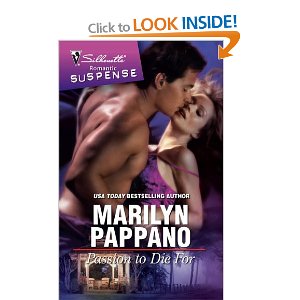
Passion to Die For, by Marilyn Pappano, Reviewed.

on Saturday, December 17, 2011

This romance is more than a mere love story, otherwise, as a man, I wouldn't have read it. With its undertones of menace, thread of injustice, mystery to be solved and unspoken comments on small town American life this is a novel that should attract readers from both genders and all adult age ranges.
The characters are alive and, whether nasty or nice, cynical or naive, beautiful or ugly, they portray traits we can all both recognise and empathise with. The main story, of unrequited love, is interwoven with another that deals with jealousy, intrigue, hatred and injustice.
The reader is driven to first trust the heroine and then doubt that trust, as she grows through the experiences she faces and even doubts herself. The hero remains a stalwart but retains his professional concerns and suspicions so that he is reluctant to make the conclusions necessary to end the doubts he's faced with.
I won't spoil the story by alluding to the ending, except to remark that it is apposite; it fits without being contrived.
As a reader of many different styles and genres, I found I was drawn into this novel by the characters very early on. The mystery and intrigue kept me absorbed and the emotional content, coupled with the well-drawn characters, carried me through to the ending.
A book I enjoyed and can happily recommend to men and women alike.

Enhanced by Zemanta

Review of Descending by Catherine Chisnall

on Monday, November 28, 2011
Catherine Chisnall
Image by stuartaken via Flickr
Rightly or wrongly, what matters to me most in fiction, apart from the necessary quality of the writing, is whether I care about the characters or not. In Descending, Catherine Chisnall has created a narrator who is so believable that the novel reads like a memoir. The other characters are drawn with equal skill and their variety brings wide interest to the book. 
At times, I felt that the writing was a little too much like that experienced in a report. And that quality did slightly detract from my enjoyment. 
But the characters saved the day in what is a contemporary story of self-discovery. I wasn't at all sure what the book was about when I started to read, but it soon became clear from the first person narrative that this was a tale about a young woman learning a hard lesson in life and growing to understand that we don't always recognise our actions as selfish until we later examine them. 
A good story, well told.


I interviewed Catherine here on the blog - the link to that interview is here: Catherine Chisnall
Enhanced by Zemanta

Book Depository - 24 hours of offers

on Wednesday, November 9, 2011
Book Depository, who deliver books to most of the world with free postage, are running a day of offers. Here's the link if you'd like to explore it.
Enhanced by Zemanta

Author Interview with Sarah Baethge.

on Thursday, October 13, 2011

Hello Sarah, please tell us about you, as a writer.

I have always liked Science-fiction and Fantasy, and write primarily to entertain myself. I admit this does result in the creation of many things that I never finish when I see that they take too much personal knowledge I am not willing to share in order to be fully understood, but I figure that if I could not be a fan of my own work, there is little point in spending the amount of time required so I feel like my story is fully told.

Your latest book is ‘The Speed of Darkness’; perhaps you’d you give us some insight into it in a few sentences?
‘The Speed of Darkness’ –my combination of Sci-fi and werewolves. The first book I’ve ever written fully enough that I was comfortable with pointing to a spot and saying: The End.

Excerpt-
   Sam closed and locked his door. With clear disgust on his face, he addressed Nigel.  “Nice,” he said sarcastically. “Nice to know you could have just gotten away easily when I jumped in to help you.”
Nigel fidgeted uncomfortably as he tried to keep himself from meeting Sam’s gaze, “It doesn’t work like-“
“You certainly were able to do it at will just now!” Sam yelled, stomping up to him.
“But Bart-“, Nigel began, gesturing as he spoke.
“Your psycho friends!” Sam thundered in anger as he raised his hands above his head. “Thanks! Can’t forget those two freaks are now after me too. All because I didn’t want to just stand by and watch them cut up some little fruit like you on tape!
“Now I find out that’s what you wanted.” With a sickened look he folded his arms and stepped away from Nigel, who simply looked confused.
“What..?” Nigel called after Sam, as he looked helplessly at the back of the other man, “I never want-“
“Oh, come on,” Sam said derisively, turning around and grabbing Nigel’s shoulder. “Why would someone, who can –FOR REAL- just zip away, stand around and wait for his buddies come at him with a knife for a video?”
Nigel finally met Sam’s eyes and said, (as if it explained everything)”Bart had a flashlight.”


How did you come to write this particular book?

A couple of silly ideas knocking around in my head started to build themselves into a story; as I wasn’t doing much else at the time, I wrote it down until I got sick of it and filed it away for 2-3 years. When I pulled it back out and read it again, I liked it just as much as ever.

Do you have a favourite character from the book? If so, who and why this particular one?

I like Nigel Hunter, my mad scientist who started experimenting on himself when others refuse to let him test on animals any more. When I was trying to decide how he would react to different situations, I let him do what I would like to do, but wouldn’t really dare to.

Where can people buy your books?

Both are here:
and you can get 1 chapter of the other FREE.

What qualities does a writer need to be successful?

Imagination and determination

What’s your working method?

Do nothing until after lunch, Relax on weekends; don’t get trapped within your own book.
Finish EVERYTHING.
Don’t ever delete anything; just file it away where you can get back to it when you’re no longer sick of it.
Yes, I realize the last two rules are currently eating up way too much space on my computer, but hey :P my crazy laptop has a multi-gigabyte hard-drive.

What’s the single biggest mistake made by beginner writers?

Deleting anything. There is nothing worse than suddenly having the idea to fix where your story flagged out, to only find it’s no longer on your computer when you go to fix it.

To what extent are grammar and spelling important in writing?

If you don’t write correctly, others will have a difficult time trying to determine what you mean.

How much do you revise your MS before sending it off?

I go through it as many times as it takes for me to be able to go through it without making any changes at all.

As a writer of Sci-fi, to what extent do you think genre is useful in the publishing world?

You have to know the name of the genre that your intended audience will look for or you might prevent your future fans from ever finding your work.

Many authors see marketing as a bind. What's your opinion on this, and how do you deal with it?

I’m somewhat iffy on this, I know that without some marketing no one will ever find my work; but because I’m so attached to what I write, I  would almost rather have that no one ever see it before I am tempted to change it for the sake of boosting sales.

What sort of displacement activities keep you from writing?

Reading, movies, and video games

What support, if any, do you receive from family and friends, writing group, or dedicated professionals?

As I am not working any ‘real’ job I live with my dad and stepmother. I receive emotional support from my mother, grandfather, 2 sisters, brother, stepsister, and a good sized list of friends and family online.

Is presentation of the MS as important as agents and publishers suggest?

Save a couple random short stories I’m only self-published, so I wouldn’t actually know.

How long does it take you to write a novel?

The actual writing is probably only a couple of months, but to let the ideas accumulate might take years.

Who or what inspires your writing?

Artwork, real life, TV
Basically anything and everything

If there’s a single aspect of writing you find frustrating, what is it?

Pace; if I stick to writing too much I start to hate it, if I take too much time off I lose the flow and cant continue what I was working on.

Is there a particular feature of writing that you really enjoy?

I like having the control to make exactly what I want to happen, it’s why much of what I write becomes too silly or embarrassing to ever finish.

Do you believe creative writing is a natural gift or an acquired skill?

I think it is a common natural talent that must be practiced to enhance to a worthwhile skill level like running or swimming.

What are you writing now?

I have a couple of modern-fantasy ideas chasing each other round my head, but the question has startled them into hiding to the point where I’m at a loss to describe what the story’s even about. Won’t have a character named Sam though. I’ve had far too many of those.

Do you have a website or blog where readers can visit?

Closest thing I have to a website is here: https://profiles.google.com/u/0/doUreallyWant2see
you can get to my blog off of there

Given unlimited resources, where would you do your writing?
Right at my desk where I’m sitting right now... Somewhere new would just distract me, prevent me from writing at all.

Where do you actually write?

A little desk in the corner of my room on a happy little 15 acre donkey ranch in central Texas. Within easy screaming distance of the cockatiel that has something to say about everything I do...

Enhanced by Zemanta